How One Surgical Nurse’s Refusal to Accept the Status Quo Sparked a Revolution in Healthcare Worker Hand Protection
125 years ago, the first use of gloves in the operating room was prompted by a surgical nurse who was ready to quit her career because the available hand protection was destroying her skin. Since that time, medical/surgical gloves have evolved to safeguard healthcare professionals and patients from harm throughout the care continuum.
Let’s look back on the evolution of healthcare worker hand protection, from the origins of surgical gloves in the late 1800s to the innovations that continue to raise the standard of safety today.
1899: Caroline Hampton, RN, Scores a Win for Surgical Teams
Throughout most of the 1800s, surgeons, nurses, and other operating room (OR) staff used their bare hands during surgical procedures.1 The aseptic process of “scrubbing in” for surgery at the time, while beneficial to the patient on the table, sounds like torture for OR team members:
“After washing with soap, the hands and arms were placed in a potassium permanganate solution, followed by a hot oxalic acid solution. Then the hands were washed with mercury bichloride.”2
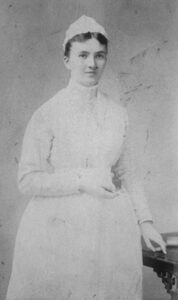
In 1899, Caroline Hampton, RN, chief surgical nurse at Johns Hopkins Hospital in Baltimore, had had enough. After over a decade of working in the OR, she developed severe rashes and eczema, and her skin began peeling because of these harsh chemicals.3 She made the painful decision to quit her career.
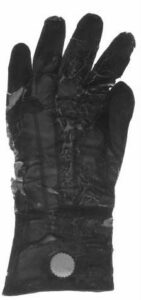
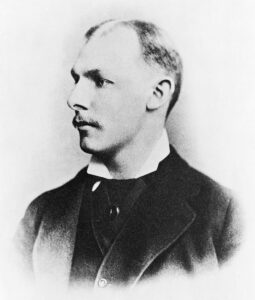
Not wanting to lose Hampton, who was known to be “unusually efficient” in the OR,4 Johns Hopkins Hospital surgeon-in-chief William Halsted, MD, collaborated with Hampton on a solution. They made a plaster cast of Hampton’s hands and commissioned the Goodyear® Rubber Company to make two pairs of vulcanized rubber gloves to protect them.
They worked. Hampton became the first medical professional to wear surgical gloves. She continued in her career, and other nurses soon adopted the gloves for protection.5
1965: Disposable Latex Gloves Offer Greater Dexterity and Convenience
In the mid-1960s, disposable latex gloves entered the market, offering surgeons a superior fit, dexterity, and tactile sensitivity compared to rubber gloves. Their single-use design also eliminated the need for reprocessing, as reusable rubber gloves must undergo sterilization between uses.6
For the next two decades, while surgeons regularly wore latex gloves, other healthcare workers typically only wore them when “caring for patients who were colonized or infected with certain pathogens or exposed to patients with a high risk of hepatitis B,” according to the World Health Organization (WHO).7
1980s: Standard Precautions Standardize Glove Usage
In response to the HIV/AIDS epidemic, the U.S. Centers for Disease Control and Prevention (CDC) introduced Standard Precautions (initially named “universal precautions”) in 1985, intended to “protect healthcare providers from infection and prevent the spread of infection from patient to patient.”8
With gloves being a central component of Standard Precautions, the wearing of latex gloves by healthcare professionals skyrocketed. These guidelines remain in place today, with the CDC recommending healthcare workers wear gloves when:
“You anticipate that you will come in contact with blood or other infectious materials, mucous membranes, non-intact skin, potentially contaminated skin, or contaminated equipment.”9
1990s: Latex Allergies Prompt New Glove Innovations
With the widespread wearing of latex gloves in care delivery came an increased incidence of latex sensitization and allergies. By the mid-1990s, latex allergy prevalence was as high as 17% among healthcare workers.10
Additionally, latex gloves do not protect the wearer’s skin from chemotherapy drugs. As more chemotherapy agents were developed and introduced into care settings, and the number of patients receiving chemotherapy grew, risks to healthcare workers increased as well.
In response, scientists developed nitrile gloves, which are not only safe for sensitive skin but also strong enough to shield healthcare professionals’ hands from drug agents and harsh chemicals.
1999: HALYARD* PURPLE NITRILE* Gloves Make Their Debut
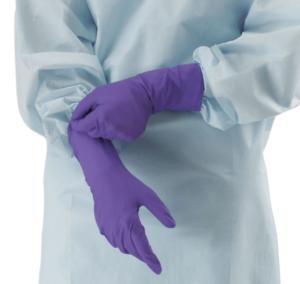 For nurses like Hampton, whose career nearly ended because the available protection wasn’t good enough, the arrival of advanced nitrile gloves in 1999 would have been transformative. That year, HALYARD* PURPLE NITRILE* Exam Gloves were introduced, now known for their proven protection against exposure to chemotherapy drugs and compliance with international standards for quality (AQL) and skin sensitization (ISO 10993-10).
125 years after Caroline Hampton demanded better protection, the standard continues to rise. While other nitrile gloves entered the market, HALYARD* PURPLE NITRILE* Exam Gloves are held to a different measure — with an AQL of 1.0, they meet a quality threshold 60% more stringent than a typical nitrile exam glove rated at 2.5. That gap isn’t a technicality. It’s the distance between a glove that passes inspection and one that was built to exceed it.
Caroline Hampton refused to keep working under conditions that were harming her and that refusal changed the trajectory of healthcare safety. Every glove pulled from a box in every hospital today traces back, in some way, to the moment she decided she’d had enough.
125 years later, the question isn’t whether healthcare workers should be protected. It’s whether the protection they’re given is good enough for the hazards they actually face. That’s the question HALYARD* PURPLE NITRILE* Exam Gloves were designed to answer.
Citations
- Lee, Kevin P. “Caroline Hampton Halsted and the Origin of Surgical Gloves.” Journal of Medical Biography, vol. 28, no. 1, 17 Nov. 2019, pp. 64–66, journals.sagepub.com/doi/10.1177/0967772019869167.
- Lee, Kevin P. “Caroline Hampton Halsted and the Origin of Surgical Gloves.” Journal of Medical Biography, vol. 28, no. 1, 17 Nov. 2019, pp. 64–66, journals.sagepub.com/doi/10.1177/0967772019869167.
- Kean, Sam. “The Nurse Who Introduced Gloves to the Operating Room.” Science History Institute, 5 May 2020, www.sciencehistory.org/stories/magazine/the-nurse-who-introduced-gloves-to-the-operating-room/.
- Museum of Health Care. “The Story of the Gloves of Love.” Museum of Health Care Blog, 14 Feb. 2024, museumofhealthcare.blog/the-story-of-the-gloves-of-love/.
- Lathan, S. Robert. “Caroline Hampton Halsted: The First to Use Rubber Gloves in the Operating Room.” Baylor University Medical Center Proceedings, vol. 23, no. 4, 2010, pp. 389–392, www.tandfonline.com/doi/abs/10.1080/08998280.2010.11928580.
- Patel, Jay J., et al. “Gloving the Surgeon: A Practical Review of Surgical Glove Material Properties, Safety, and Waste.” Annals of Surgery Open, vol. 6, no. 3, 4 Aug. 2025, pmc.ncbi.nlm.nih.gov/articles/PMC12453325/. | “Ansell Celebrates 50 Years of Innovation with GAMMEX® Surgical Gloves.” Ansell, 2015, www.ansell.com/us/en/press-releases/ansell-celebrates-50-years-of-innovation-with-gammex-surgical-gloves.
- World Health Organization. WHO Guidelines on Hand Hygiene in Health Care: First Global Patient Safety Challenge Clean Care Is Safer Care. National Library of Medicine, 2009, www.ncbi.nlm.nih.gov/books/NBK144047/.
- United States, Centers for Disease Control and Prevention. “Standard Precautions for All Patient Care.” CDC, 3 Apr. 2024, www.cdc.gov/infection-control/hcp/basics/standard-precautions.html.
- United States, Centers for Disease Control and Prevention. “Clinical Safety: Hand Hygiene for Healthcare Workers.” CDC, 27 Feb. 2024, www.cdc.gov/clean-hands/hcp/clinical-safety/index.html.
- Liss, G. M., et al. “Latex Allergy: Epidemiological Study of 1351 Hospital Workers.” Occupational & Environmental Medicine, vol. 54, no. 5, May 1997, pp. 335–342, pubmed.ncbi.nlm.nih.gov/9196456/.
Image Credits
Image 1. Hampton, Caroline. Photograph. 1889. Alan Mason Chesney Medical Archives of The Johns Hopkins Medical Institutions.
Image 2. Halsted, William. Photograph. 1880. Welcome Collection / Science History Institute Museum and Library.
Image 3. Early Rubber Surgical Glove Worn at Johns Hopkins. Photograph. Alan Mason Chesney Medical Archives of The Johns Hopkins Medical Institutions.